What Is Communion?
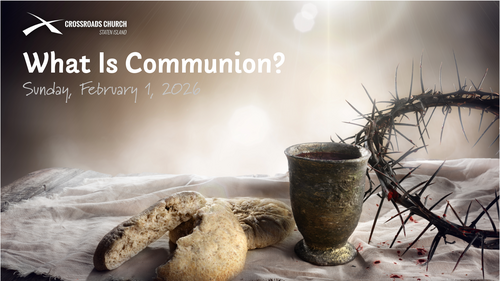
What Is Communion? | February 1, 2026
One of my all-time favorite outfits was my second-grade communion suit, which included white dress shoes! At that time, we were taught that you "received your first holy communion" around the second grade, which was preceded by going to Penance, also known as the Sacrament of Reconciliation. However, what I later learned was that there was more to communion than white shoes and sacramental traditions.
See, the practice of communion is rooted in Scripture, and that trumps man-made traditions. The Greek word for "communion" is koinōnia (κοινωνία), which in the New Testament signifies fellowship, sharing in common, joint participation, and a close relationship. In the context of communion, it represents being connected with the sacrificial death of Christ. Thus, communion is a lasting reminder of the finished work of Christ on the Cross.
Key Bible verses on communion emphasize the institution of the Lord's Supper by Jesus, the remembrance of His sacrifice, and the fellowship it represents. These verses can be found in Matthew 26:26-29, Mark 14:22-25, Luke 22:19-20, and in Paul's letters, specifically:
First Corinthians 10:16, "The cup of blessing that we bless, is it not a participation in the blood of Christ? The bread that we break, is it not a participation in the body of Christ?"
First Corinthians 11:23-29, “For I received from the Lord what I also passed on to you: The Lord Jesus, on the night he was betrayed, took bread, 24 and when he had given thanks, he broke it and said, ‘This is my body, which is for you; do this in remembrance of me.’ 25 In the same way, after supper he took the cup, saying, ‘This cup is the new covenant in my blood; do this, whenever you drink it, in remembrance of me.’ 26 For whenever you eat this bread and drink this cup, you proclaim the Lord’s death until he comes. 27 So then, whoever eats the bread or drinks the cup of the Lord in an unworthy manner will be guilty of sinning against the body and blood of the Lord. 28 Everyone ought to examine themselves before they eat of the bread and drink from the cup. 29 For those who eat and drink without discerning the body eat and drink judgment on themselves."
What we know from this passage and others is that every time we celebrate communion, we are not reenacting the events of Christ's death, nor are we believing that the elements change or have the power to save us. Instead, we approach communion with reverence and reflection on the cross, and with a prayerful focus on renewal.
See, the practice of communion is rooted in Scripture, and that trumps man-made traditions. The Greek word for "communion" is koinōnia (κοινωνία), which in the New Testament signifies fellowship, sharing in common, joint participation, and a close relationship. In the context of communion, it represents being connected with the sacrificial death of Christ. Thus, communion is a lasting reminder of the finished work of Christ on the Cross.
Key Bible verses on communion emphasize the institution of the Lord's Supper by Jesus, the remembrance of His sacrifice, and the fellowship it represents. These verses can be found in Matthew 26:26-29, Mark 14:22-25, Luke 22:19-20, and in Paul's letters, specifically:
First Corinthians 10:16, "The cup of blessing that we bless, is it not a participation in the blood of Christ? The bread that we break, is it not a participation in the body of Christ?"
First Corinthians 11:23-29, “For I received from the Lord what I also passed on to you: The Lord Jesus, on the night he was betrayed, took bread, 24 and when he had given thanks, he broke it and said, ‘This is my body, which is for you; do this in remembrance of me.’ 25 In the same way, after supper he took the cup, saying, ‘This cup is the new covenant in my blood; do this, whenever you drink it, in remembrance of me.’ 26 For whenever you eat this bread and drink this cup, you proclaim the Lord’s death until he comes. 27 So then, whoever eats the bread or drinks the cup of the Lord in an unworthy manner will be guilty of sinning against the body and blood of the Lord. 28 Everyone ought to examine themselves before they eat of the bread and drink from the cup. 29 For those who eat and drink without discerning the body eat and drink judgment on themselves."
What we know from this passage and others is that every time we celebrate communion, we are not reenacting the events of Christ's death, nor are we believing that the elements change or have the power to save us. Instead, we approach communion with reverence and reflection on the cross, and with a prayerful focus on renewal.

Recent
Archive
2026
January
New Year's RevolutionYour New Year PrayerDevelop The Habit Of Talking To GodThe Wise Men's Visit To JesusTake The Hammer To Your Unhealthy FearRenovating Your Mind Learning And Listening Lead To Blessing Oh Lord, I Pray, Deliver My SoulGod Blesses FaithfulnessRenovating Your Mind With God's Truth MLK Perspective Avoid Self-Pity Getting Out Of A RutGive From Warm HandsGet Off Your High Horse
February
What Is Communion?Blessed Are The Pliable Starve Your Distractions And Feed Your Soul You Can Overcome Doubt Pray For God's CoveringPraying And Waiting Works Praying For WisdomTeamwork Makes The Mission WorkPray For Your Adversaries To Be Humbled Pray For StrengthFlying Together In The FaithDevelop A Personal Code Of Honor You Can Be Strong and CourageousYour Starting Point For PeaceReceive God’s Provision By Believing SYou Can Prioritize PrayerWalk In Light
March
Pray For DiscernmentFix Your Critical Spirit With DiscernmentCount Your Blessings, Not Your ProblemsPay Now, Play LaterWait On The Good Shepherd's ProvisionsBelieving In Resurrection Power St. Patrick’s Perseverance Recognize That Delays For Help Are Not Denials March Madness-MindedDo You Believe? Remove The Obstacles With Jesus' PromisesDivine DisappointmentsStand Firm In Your Faith Palm Sunday: Go From Cheers to Commitment
April
Understanding The Passover Follow Through On Promises Made To GodStanding At The Foot Of The Cross Standing At The Empty TombStepping Past Our FearsDeclare God's Promise of Forgiveness Follow God's MethodChallenge False NarrativesYour Best Ability Is Your AvailabilityYou Have A Message To ShareGod Is Faithful To Provide Keep Pushing Forward
May
You Have A Means To Rely OnMay The Faith Be With You Trust In The Holy Spirit For TruthUnderstanding The Baptism Of The Holy SpiritGod Casts Our Sins Into The Depths Of The SeaBreaking Through Impossible ThinkingGYou Can't Out Run PrideUse This Prayer For Panic and Pain Don't Waste Your Bananas or Your BlessingsSeek God Early And Often For Connection
2025
June
God's Forgiveness And Our Failures Faithfulness And Flag DayFollowingPraying About Panic And PainEncouragement Is Necessary Oh, Be Careful Little EyesGod's Promise To Those Who Wait | June 19, 2022 Protect Your TorchTrust God To ProvideGod Is Our Mighty Fortress Kindness CountsAre You Weakening Your Conscience?Maintain A Healthy Conscience Show Mercy Even When People Are MeanRelease Control Of Your Circumstances
No Comments